When most business owners think about a Fire Risk Assessment (FRA), they immediately picture escape doors, fire extinguishers, and smoke detectors. While those physical safeguards are vital, true workplace safety requires a broader look at emergency preparedness—specifically, how your team responds to medical emergencies during an incident.
Under the Health and Safety (First-Aid) Regulations (Northern Ireland) 1982 and the Fire Safety (Northern Ireland) Order 2006, employers have a legal duty to provide adequate first aid equipment, facilities, and trained personnel.
Integrating your first aid provision and Automated External Defibrillator (AED) access directly into your Fire Risk Assessment ensures your business is prepared for every angle of a crisis.
Here is how fire risk and first aid link together, and what Northern Ireland employers need to check.
The Direct Link Between Fire Evacuations and First Aid
During a fire emergency or drill, the risk of physical injury spikes dramatically. Slip, trip, and fall hazards increase during a rapid evacuation, while smoke inhalation or burn injuries require immediate medical intervention before emergency services arrive on scene.
Your Fire Risk Assessment evaluates these scenarios by checking:
1. Designated First Aiders on Assembly Duty
When your building evacuates, who is responsible for bringing the emergency first aid kit to the assembly point? Your assessment ensures that trained First Aiders are assigned clear roles during an evacuation so injuries at assembly points can be treated instantly.
2. Strategic Placement of First Aid Kits & AEDs
If a first aid kit or AED is stored in a rear office or kitchen area that becomes cut off by smoke or fire, it becomes completely useless. Medical equipment must be positioned in accessible, low-risk areas along primary escape routes or near main emergency exits.
3. AED Accessibility and Awareness
In the UK and Northern Ireland, sudden cardiac arrest can happen in any workplace. Having an AED on-site—or knowing the exact location of the nearest public access defibrillator—saves vital minutes. Your emergency plan should clearly detail who is trained on the AED and how it is retrieved during a building crisis.
Practical First Aid Checklist for NI Businesses
To ensure your workplace meets local safety expectations, review these baseline requirements:
First Aid Needs Assessment: Have you evaluated the specific risks of your workplace (e.g., machinery hazards in a workshop vs. low-risk desk work)?
Adequate First Aid Stock: Are your first aid kits fully stocked, in-date, and checked monthly alongside your fire safety equipment?
Appointed Persons & First Aiders: Do you have enough trained staff to cover shift patterns, remote working, and annual leave?
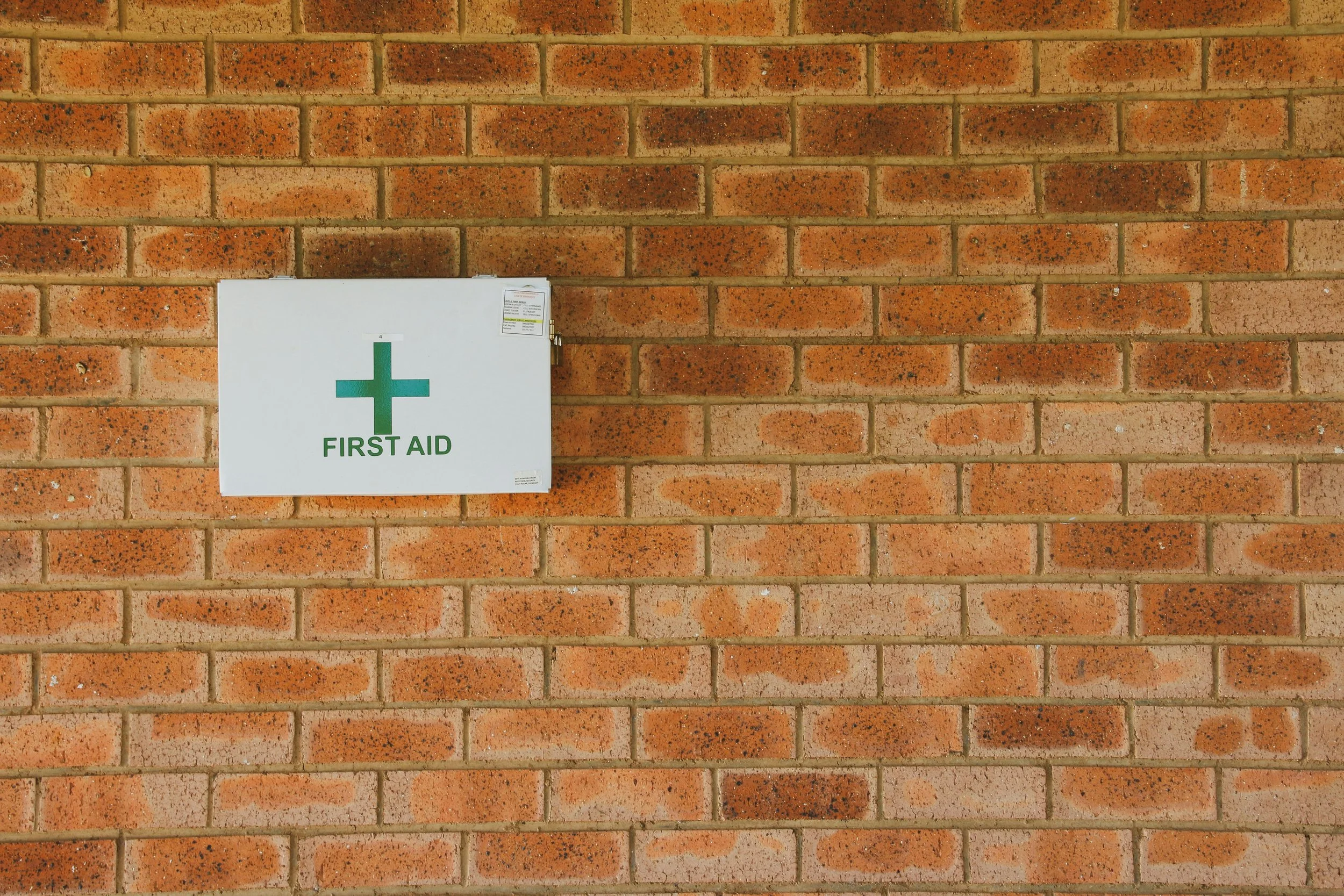
Clear Signage: Are first aid boxes and AED cabinets clearly marked with standard green-and-white safety signs?
Complete Workplace Safety Solutions with Fire Safety Training NI
Managing fire safety and first aid separately often leads to gaps in your emergency planning. Combining your Fire Risk Assessment, Fire Warden training, and First Aid / AED instruction creates a seamless, stress-free compliance strategy.
At Fire Safety Training NI, David Gillespie provides comprehensive Fire Risk Assessments alongside accredited First Aid at Work and AED training for businesses across Belfast, Lisburn, Ballymena, and all of Northern Ireland.
Ready to align your fire safety and first aid plans?
Contact David Gillespie today at Fire Safety Training NI for practical advice and combined safety training packages.
Phone: 07718911122
Email: davygillespie@btinternet.com