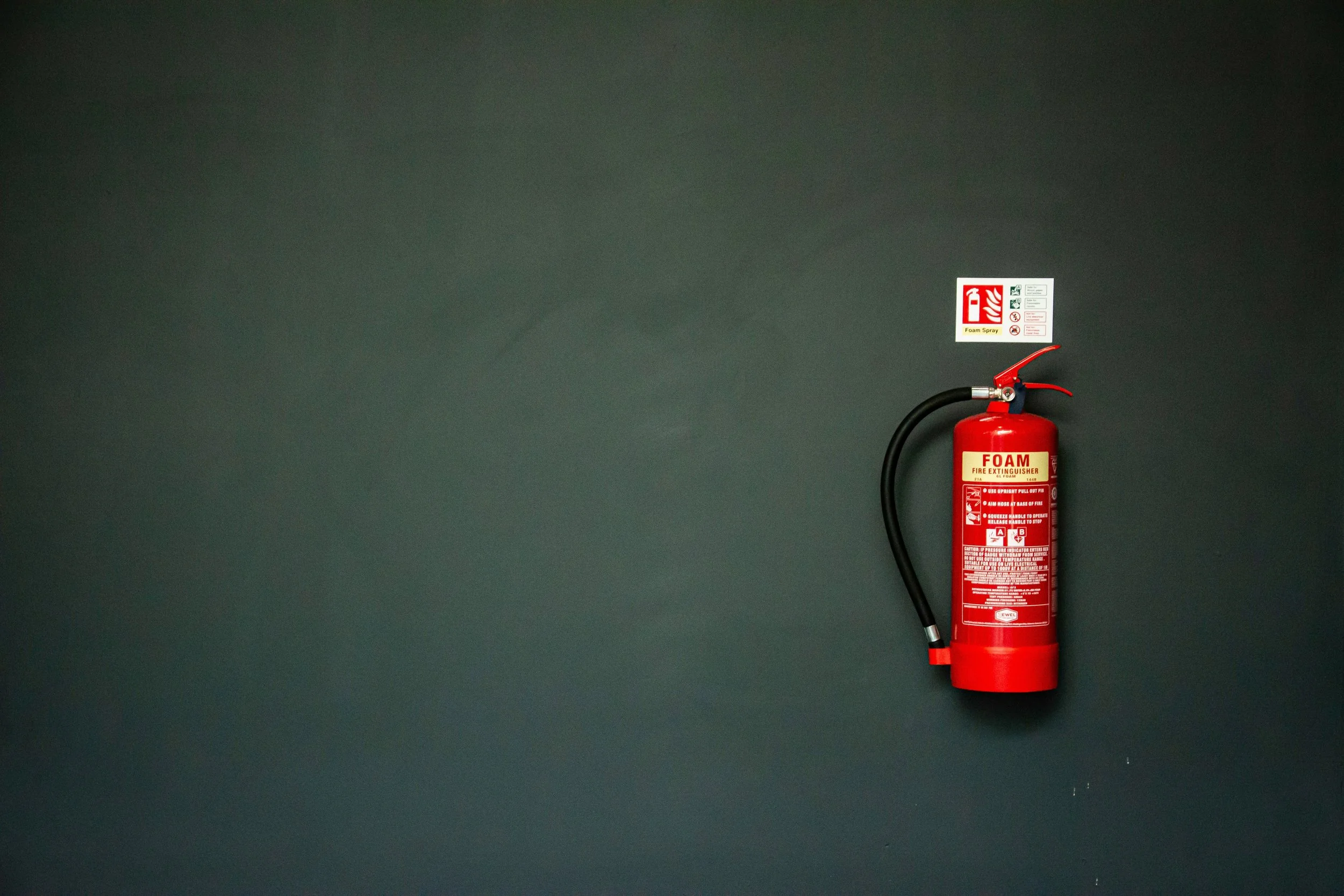
Having fire extinguishers mounted on the wall is standard practice for almost every business across Northern Ireland. But simply having them present is only half the battle.
Under the Fire Safety (Northern Ireland) Order 2006, your property’s Fire Risk Assessment (FRA) does not just look at physical escape routes; it sets the mandatory standards and maintenance schedules for all active fire protection equipment on your site.
During routine Northern Ireland Fire & Rescue Service (NIFRS) audits, inspectors frequently find that while equipment was installed years ago, routine maintenance and servicing records have been completely neglected.
Here is what your Fire Risk Assessment requires when it comes to your fire safety gear and servicing schedules.
1. Matching the Right Extinguisher to the Hazard
A standard "one-size-fits-all" approach to fire extinguishers can actually create serious safety hazards. Your Fire Risk Assessment evaluates the specific ignition sources and fuel types present in each area of your workplace:
Class A (General Combustibles): Paper, cardboard, wood, and textiles require Water or Foam extinguishers.
Class B & C (Flammable Liquids & Gases): Storage areas for paints, solvents, or fuel require Foam or Dry Powder units.
Electrical Hazards: Server rooms, main switchboards, and office computer setups require Carbon Dioxide ($CO_2$) units to prevent conductivity risks and equipment damage.
Class F (Cooking Oils): Commercial kitchens using deep fat fryers legally require specialized Wet Chemical extinguishers and fire blankets.
Using the wrong extinguisher on a fire (such as water on an electrical fire or deep fat fryer) can have catastrophic results. Your assessment ensures the correct media is positioned within easy reach of the specific hazard.
2. Statutory Servicing and Testing Schedules
Your Fire Risk Assessment relies on the assumption that equipment will work instantly when needed. To ensure this, British Standard BS 5306-3 outlines strict maintenance intervals that your business must follow:
Monthly Visual Inspections: A quick internal check to ensure tamper seals are intact, pressure gauges are in the green zone, and units are not blocked or damaged.
Annual Professional Servicing: Every 12 months, a competent technician must inspect, weigh, and test all extinguishers, tagging them with up-to-date service labels.
Extended Service / Discharge Testing: Depending on the extinguisher type (typically every 5 years for water/foam and 10 years for $CO_2$), units require a full discharge test or replacement.
3. Logbooks and Compliance Records
If an NIFRS inspector visits your premises in Belfast, Ballymena, or Derry, verbal reassurance is not enough. You must produce a physical or digital Fire Safety Logbook containing up-to-date service certificates for:
Portable Fire Extinguishers & Hose Reels
Fire Alarm & Detection Systems (serviced bi-annually)
Emergency Lighting Systems (serviced annually, with monthly function tests)
Missing maintenance records are treated as a direct breach of your Fire Risk Assessment obligations.
Streamline Your Equipment & Assessment Needs
Managing your Fire Risk Assessment alongside your extinguisher servicing shouldn't mean dealing with multiple different contractors.
At Fire Safety Training NI, David Gillespie provides a complete, straightforward service—carrying out your accredited Fire Risk Assessment and ensuring your physical fire protection gear and maintenance records are 100% compliant.
Need your Fire Risk Assessment updated or your fire equipment audited?
Contact David Gillespie today at Fire Safety Training NI for practical, local assistance anywhere in Northern Ireland.
Phone: 07718911122
Email: davygillespie@btinternet.com